Nell: Designing the Suno for podcasts
Founding Product Designer · Jan 2026 - July 2026
Podcasts made for the person who asks
Nell is a category-defining generative AI product for consumers: what Suno did for music, Nell does for podcasts.
Origin
The idea comes from the adaptive Primer in Neal Stephenson's The Diamond Age: curiosity in, personalized learning out.
Text-to-speech and large language models set off a new wave of generative media. Nell uses them to make every podcast personal to whoever prompts it. Instead of only listening to shows from the establishment, anyone can now create a good one.
Nell is backed by Danny Rimer (Index Ventures), Guillermo Rauch (Vercel), Anton Osika (Lovable), Mati Staniszewski (ElevenLabs) and Soleio.
What I did
I designed, prototyped and built the product, and advised on the brand direction. I shaped the whole experience, from onboarding to the details of the create flow.
- Design: Onboarding, create flow, library, show and episode pages
- Prototyping: Working prototypes for investors, user tests and engineering
- Building: Shipped front-end code alongside the engineers
- Brand: Led the logo decision with our branding agency
- Analytics: Set up the product analytics for the private beta
One prototype to align the team
While we were pitching Nell to investors, I built the Nellsky Proskept prototype. It became the reference the whole team used to align on and prioritize the work.
From it we kept a spreadsheet that ranked every feature we had to lock down before launch.
What the market taught us
I studied the consumer AI products closest to what we were building: Spotify's AI features, Sun and Suno.
Key insight
Consumers need to be told up front that what they're hearing is AI, and generation has to be fast.
AI can write the script, but making a podcast is still work
ChatGPT, Claude and NotebookLM can already summarize and explain. Turning that into something polished enough to listen to still takes too much effort.
The bar
Nell had to feel native to audio, not like a chatbot with an export button.
Three ways to create a show
We weighed several options for every step. For the create flow, I built three versions.
- Text-to-speech prototype: to get prompt-to-audio working end to end
- Chat: users describe the show they want in a conversation
- Pills: users tap pills to pick and adjust options across a few short screens
Why we chose pills
- It fit the backend: We already had routes for a single generation endpoint. A chat flow would have meant reworking it and burning more tokens on every show.
- It was fast: One request, no back and forth before audio starts generating.
- Users preferred it: In testing, tapping pills and adjusting screens was the easiest flow to get through and had the lowest drop-off.
The engineers instrumented the app in Datadog so we could see what was happening at each step. I proposed the pill-based flow and led it through design and build.
Designing the wait
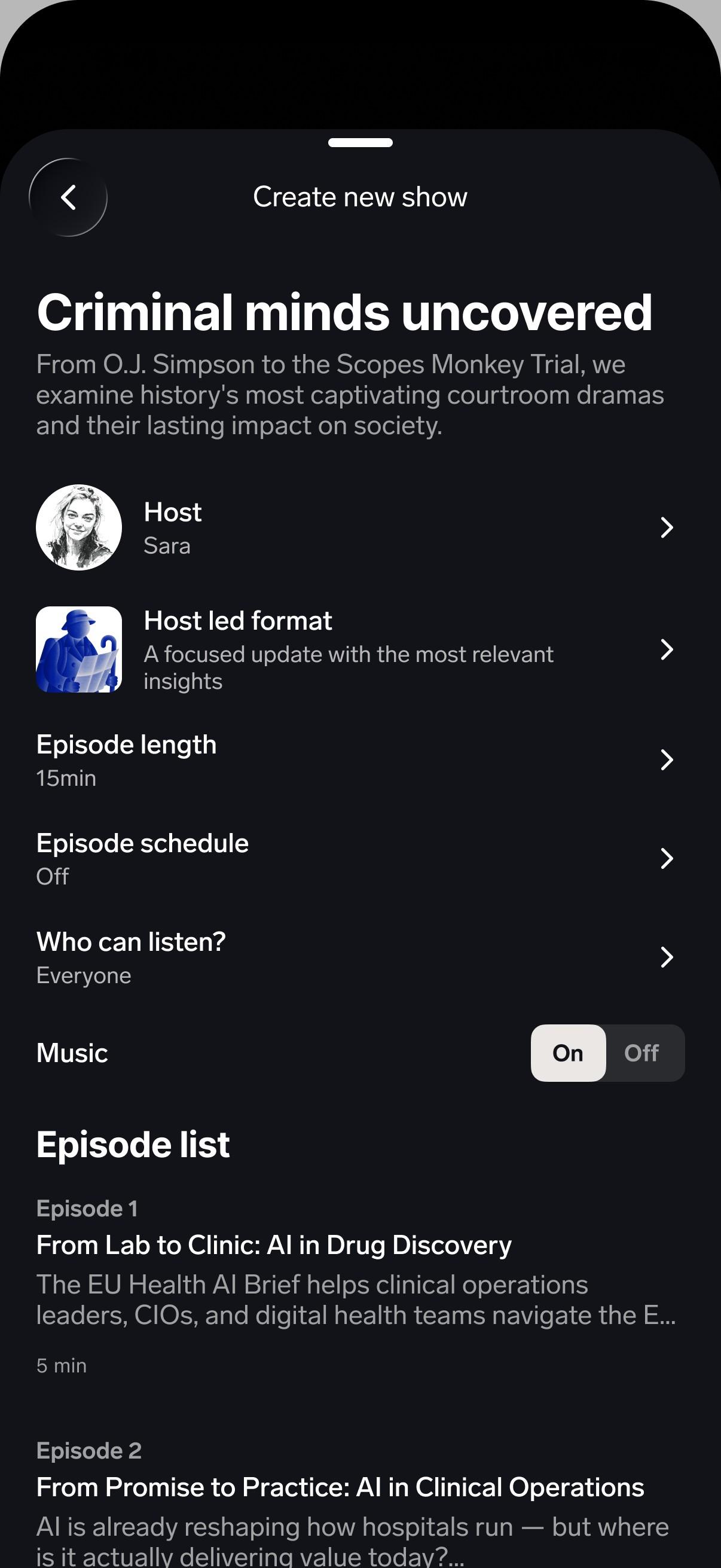
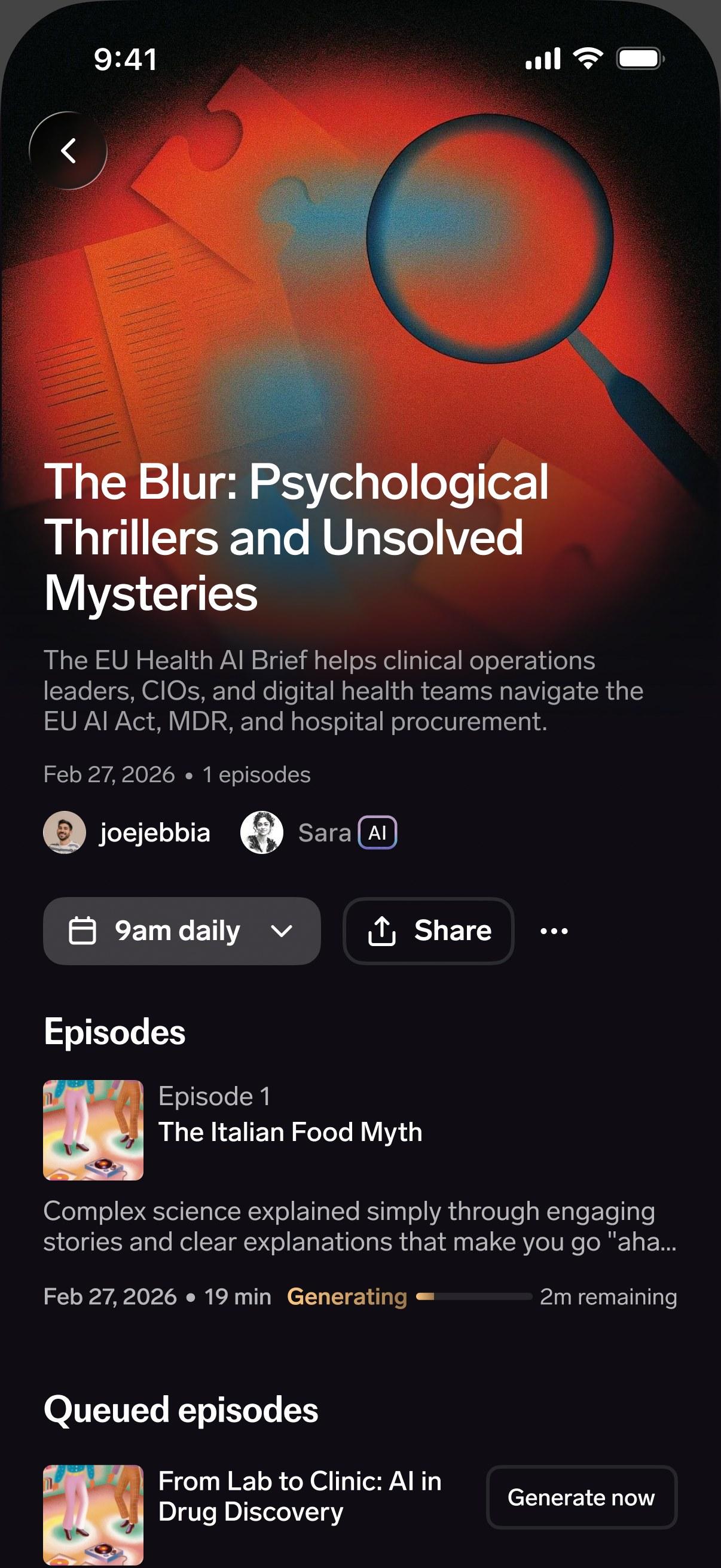
Generating an episode takes time, and our research said generation has to feel fast. I designed three loading states so a long-running generation reads as progress, not a stall.
Landing in the library
After creating a show, users land in the Library tab. That was a deliberate decision I pushed for, because it was the most important mental model to get right.
Every show and episode you generate lives in the Library, so anchoring new episodes next to the rest of your library made sense.
Decision
Shows start public, to increase discovery and engagement. A lock marks the private ones.
The episode page
I spent a lot of time on the details of the episode page. We considered:
- Show details that looked the same as episode details
- Host information on two lines vs. one
Decision
Episode and show details had to be visually distinct, so the episode page carries a play icon.
One brand to tie it together
To tie the product into one cohesive brand, we hired Monikor for a $75,000 rebrand covering our logo, typeface and moodboard. I convinced the team to go with the logo Nell uses today.
Measuring the private beta
Gearing up for the private beta, tens of thousands of people signed up. I built a product analytics dashboard so we could measure engagement and retention from day one.
Shaders for launch marketing
The goal was marketing that made Nell feel mysterious. We judged each shader by how closely it matched the brand guidelines.
Impact
Nell is still in private beta. These metrics are already instrumented, and once we launch we'll start measuring and experimenting with them:
- Signups who create a first episode
- Time to first episode
- Drop-off through the create flow
- Week 1 retention